Muslim Girl and Boy Bluework – Design Review for Sellers
As an embroidery designer who has spent years behind a machine, prepping files for craft fairs and helping small shop owners choose what actually sells, I have learned to spot a winning design the moment I open the file. When I first loaded the Muslim Girl and Boy Bluework design, I immediately saw potential for faith-based handmade products that feel personal, warm, and culturally meaningful. This design is not loud or flashy. It belongs in the category of gentle, expressive, faith-inspired embroidery that resonates with families, gift shoppers, and collectors of meaningful handmade goods. Let me walk you through what works, what needs attention, and how to turn this machine embroidery design into a real, sellable product for your next craft fair booth or Etsy shop.
First Impressions: Soft, Cultural, and Booth-Ready
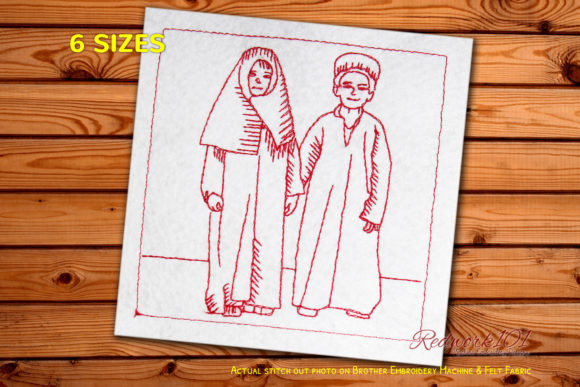
The Muslim Girl and Boy Bluework design gives off a soft, storybook feel. The bluework style, with its monochromatic blue stitching, creates a calm and cohesive look that is easy to pair with neutral fabrics, natural linens, or soft cotton. This is not a bold, oversized statement piece. Instead, it feels like a gentle focal design that invites customers to lean in and look closer. At a craft fair, that kind of quiet appeal is powerful. People stop, smile, and connect with the imagery on a personal level. If you are selling to Muslim families, interfaith gift buyers, or anyone looking for culturally affirming home and gift items, this design speaks directly to that audience. The bluework aesthetic also gives it a slightly vintage, hand-drawn look that photographs beautifully for online listings and printable mockups.
How Muslim Girl and Boy Bluework Performs on Different Products
One of the first questions I ask myself when reviewing a new embroidery file is: where will this actually sell? For the Muslim Girl and Boy Bluework design, I see strong performance across several product categories. Let me break it down by product type so you can plan your booth and production run with confidence.
Tote Bags and Market Bags
Tote bags are a staple for any craft fair seller, and this design fits beautifully on a standard tote. The bluework style looks crisp against natural canvas, cream cotton, or light gray fabric. Because the design is not overly dense, it stitches quickly, making it practical for batch production. I recommend placing it centered on the front panel or slightly offset for a modern look. Customers will see it from across a booth and immediately recognize the cultural theme. This is a strong product for Etsy listings and in-person sales alike.
Apron Embroidery
Aprons are another natural fit. A simple waist apron or full bib apron with the Muslim Girl and Boy Bluework stitched on the front pocket area creates a giftable item that feels thoughtful and personal. The blue thread pairs well with denim, linen, or even a soft apron in a pastel shade. Just be mindful of fabric texture: smooth cotton or cotton-blend aprons give the best stitch clarity. Aprons with heavy texture may soften the fine details of the faces and clothing lines.
Tea Towel Embroidery
Tea towels are a low-cost, high-perceived-value product that sells well at markets. The Muslim Girl and Boy Bluework, stitched as a small accent near the hem or centered on the towel, creates a beautiful kitchen or home gift. The bluework style feels at home on a towel, especially if you choose a natural or cream base. Because towels are handled frequently, make sure your stabilizer is substantial enough to prevent puckering. I also suggest testing a sample on the exact towel fabric you plan to use, as some towels have a loose weave that can distort small details.
Embroidered Patches
Patches are a fantastic way to offer this design at a lower price point. You can stitch the Muslim Girl and Boy Bluework onto a patch blank, trim it, and sell it as an iron-on patch. Customers can then add it to backpacks, jackets, or pouches. This also gives you a booth sample that is quick to produce and easy to display. Patches are repeatable, lightweight, and perfect for impulse buys. Just keep the stitch density in check so the patch lies flat and doesn't curl at the edges.
Caps and Hats
Hats are tricky. The curved surface of a cap means that any design with fine details or small lettering can become distorted. The Muslim Girl and Boy Bluework is not overly complex, but it does contain facial features and clothing lines that need to remain clear. I would only recommend this design on a cap if you use a good cap stabilizer and test the placement carefully. A front-center placement on a structured cap works best. If you are new to cap embroidery, test at least three samples before adding it to your product line.
Small Pouches and Fabric Pouches
Small pouches, makeup bags, and pencil cases are excellent for this design. The bluework style looks delicate and special on a small canvas. Customers often buy these as gifts for children, teachers, or friends. The design does not need to be large to be effective. A smaller hoop size will work well here, and the stitch count is manageable for quick production runs. I recommend using a cutaway stabilizer to keep the fabric from shifting, especially if your pouch material is slippery or lightweight.
Pillow Covers
Pillow covers are a higher-end product that commands a good price at craft fairs. The Muslim Girl and Boy Bluework stitched on a linen or cotton pillow cover creates a beautiful decorative piece for a child's room, a playroom, or a cozy reading nook. The blue thread against a soft cream or beige background feels calm and intentional. This is a product that will stand out in a booth display, especially if you stack it with other faith-themed or culturally inspired items. Just be sure to use a stabilizer that will hold up to the wear and tear of a pillow cover that will be handled and washed.
Practical Selling and Production Points
When you are selling at a craft fair, every second counts. The Muslim Girl and Boy Bluework design is easy to understand at a glance. Customers do not need to study it to know what it represents. That immediate recognition is a huge advantage. Whether you are selling to a Muslim family looking for a gift or to a customer who simply appreciates beautiful handcrafted items, the design communicates its theme clearly and warmly.
For photography and online listings, this design is a dream. The bluework style creates a strong contrast against light fabrics, and the simple color palette means it photographs well without needing special lighting. You can create printable mockups that show the design on a tote bag, apron, or pillow cover, and those mockups will look clean and professional. For Etsy sellers, this is a major plus. The design will stand out in search results and on social media because the imagery is distinctive and the blue color is visually appealing.
In terms of repeatability for batch production, the Muslim Girl and Boy Bluework is solid. The stitch density is moderate, which means it will not cause excessive needle wear or thread breakage when you are stitching multiple pieces in a row. I recommend testing one full sample on your chosen fabric first, then tracking your stitch time and thread usage. Once you have those numbers, you can price your finished products accurately and plan your production schedule for busy market seasons.
Careful-Use Notes: What to Watch For
No design is perfect for every situation, and the Muslim Girl and Boy Bluework has a few areas where you need to be careful. Let me share what I noticed during my review.
Dense Stitch Areas and Tiny Details
The design includes facial features and clothing lines that are small and precise. If you stitch this design at a very small size, those details may blur or lose clarity. I recommend keeping the design at a size that allows the facial features to remain distinct. Avoid shrinking it down too much for tiny products like keychains or small patches. If you must use a smaller hoop, test the design first on scrap fabric to confirm that the details are readable.
Fabric Texture and Dark Fabric
This design is stitched in blue thread, which means it will show up best on light or medium-light fabrics. On dark fabric, the blue thread will not be visible unless you switch to a lighter thread color. If you want to offer the design on dark tote bags or dark aprons, you will need to change the thread color to white, cream, or a light pastel. That is a simple adjustment, but it changes the look of the design. The bluework aesthetic is part of the charm, so consider whether a different thread color still fits the intended mood.
Curved Surfaces and Small Lettering
If the design includes any small text or fine lines, those elements will be more difficult to stitch on curved surfaces like caps or small cylindrical pouches. The design as described does not appear to have heavy lettering, but I always advise checking the actual embroidery file for any small text that might be affected. A good rule is to test on a curved surface before committing to a full production run.
Thick Fabric and Textured Towels
Thick fabrics like heavyweight canvas or textured towels can cause the stitches to sink into the fabric, making the design look less crisp. For the Muslim Girl and Boy Bluework, I recommend using a medium-weight fabric with a smooth surface. If you want to use a thicker fabric, increase your stabilizer weight and consider using a water-soluble topping to keep the stitches clean and defined.
Visual Appeal, Customer Attention, and Booth Display
At a craft fair, your booth is a stage. Every product on your table needs to earn its spot. The Muslim Girl and Boy Bluework design has a strong visual appeal because it is both familiar and unique. Customers who are looking for faith-based or culturally meaningful handmade items will notice it immediately. Families with young children will be drawn to the gentle, storybook quality of the design. And because the bluework style is less common than multicolor embroidery, it stands out as something different and special.
For your booth display, I recommend grouping products that feature this design together. Place a tote bag, a tea towel, and a small pouch on a shelf or tabletop so customers can see the design across multiple items. This creates a cohesive look and encourages customers to buy more than one product. You can also stitch a sample on a piece of fabric and frame it as a display piece, showing the detail of the embroidery up close. This is especially helpful for customers who are not familiar with machine embroidery and want to see the quality of your work.
Brand consistency is another benefit. If you are building a small shop product line that focuses on faith-based or culturally inclusive designs, the Muslim Girl and Boy Bluework fits perfectly alongside other similar themes. Your booth will feel intentional and curated, which builds trust with buyers. Customers will remember your brand and look for you at future markets.
Embroidery Designer Notes: Test Before You Sell
Before you add the Muslim Girl and Boy Bluework to your product lineup, I strongly recommend following these practical steps. These are the same steps I take with every new design I consider for production.
- Test on scrap fabric first. Use the exact fabric you plan to sell on. Stitch the design and examine the stitch quality, tension, and clarity. Look for any pull or puckering around the edges.
- Check thread contrast. The blue thread should stand out clearly against your fabric. If the contrast is too low, the design will look washed out. Adjust your thread color or fabric choice accordingly.
- Review spacing and placement. Make sure the design is centered and not too close to seams, zippers, or edges. For tote bags and aprons, leave at least a few inches of breathing room around the design.
- Confirm hoop size. The design should fit comfortably in your hoop without being cramped. If you are using a smaller hoop, test the design at the reduced size to ensure details remain sharp.
- Inspect stitch density. If the design has areas that are too dense, the fabric may become stiff or the needle may struggle. Adjust the density in your embroidery software if needed, or use a lighter stabilizer to compensate.
- Use the right stabilizer. For most fabrics, a cutaway stabilizer is a safe choice. For towels or stretchy fabrics, consider a combination of tearaway and water-soluble topping. Always test your stabilizer choice on a sample before production.
- Create at least one real mockup. Do not rely solely on digital previews. Stitch the design on an actual product and photograph it for your listings and booth display. A real mockup helps you spot issues that the software will not show.
- Compare fabric colors. The same design can look completely different on cream fabric versus gray fabric versus light blue fabric. Sample at least three fabric colors to see which one sells best.
- Confirm commercial licensing. Before you sell any finished product featuring this design, verify that your embroidery file includes commercial use rights. Every designer has different terms, and you need to be sure you are allowed to sell the finished products. If the license is not clear, contact the file creator directly.
Final Thoughts on Muslim Girl and Boy Bluework
The Muslim Girl and Boy Bluework design is a strong addition to any craft fair product line or Etsy shop that caters to faith-based and culturally meaningful handmade goods. It is soft, recognizable, and versatile across multiple product types. The bluework style gives it a unique look that will stand out in a booth and photograph well for online listings. With careful attention to fabric choice, stabilizer, and stitch testing, you can turn this machine embroidery design into a reliable seller that customers will love. Whether you are making tote bags, tea towels, aprons, patches, or pillow covers, this design has the potential to become a staple in your small shop product lineup. Take the time to test it thoroughly, and you will be ready to offer a finished product that feels intentional, high-quality, and ready for the market.